





Restaurant POS systems: The best systems for 2026

Kim Jüditz

8
Minuten Lesezeit

02.10.2026
Key takeaways:
- A good restaurant POS system goes far beyond just taking payments – it connects tables, the kitchen, payments and ordering channels into one system.
- Table management, bill splitting and mobile ordering are essential for restaurant operations and should be natively included in the system.
- TSE compliance will be mandatory for all businesses from 2027 – switching now ensures you are legally and operationally secure.
- An all-in-one system saves costs in the long run and reduces the effort of maintaining data across multiple tools.
If you run a restaurant, you know the drill: table 7 wants to split the bill, table 12 is waiting for their food, and an order has gone missing in the kitchen. A weak POS system turns these situations into unnecessary stress. A strong one makes them invisible. The problem: the market is crowded. From budget-friendly iPad solutions to comprehensive hospitality platforms, there are dozens of providers, and many businesses only realise which features are truly missing once they are in the thick of daily operations. This article will help you find the right system for your restaurant.
In this article:
Why a standard POS system isn't enough for restaurants
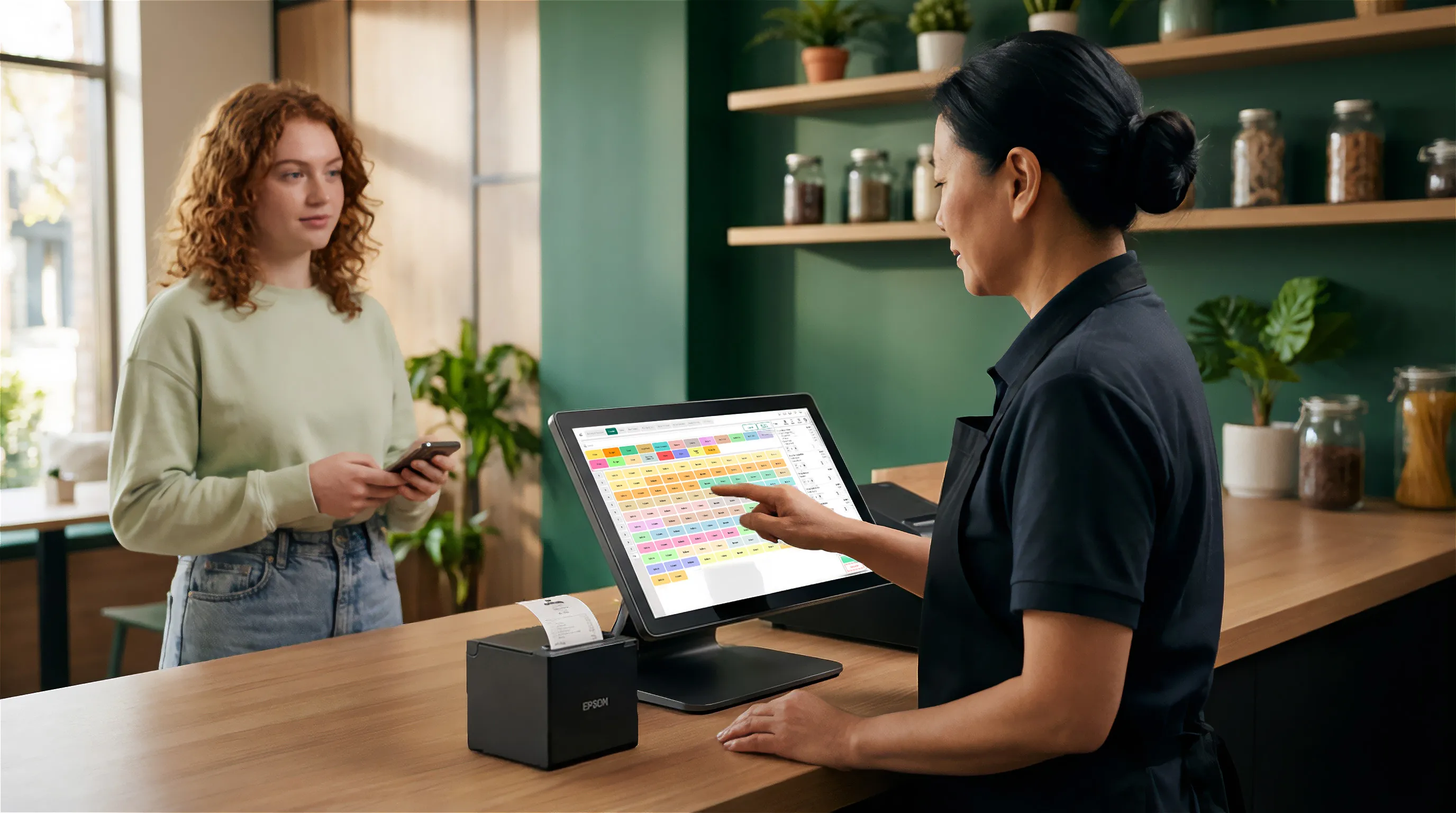
A restaurant is not a takeaway or a bar. Operations are more complex: tables need to be managed, bills split, rounds added, and the kitchen coordinated simultaneously. On top of that, there are delivery portals, your own web shops, and the requirements for GoBD compliance and TSE.
A basic POS system can handle this – but often only with workarounds, additional tools and manual effort. This costs time, increases the error rate and makes the system more vulnerable during peak hours.
Modern hospitality platforms take a different approach: all processes run within a single system – from table ordering to reporting.
The 7 most important features in a restaurant POS system
1. Table management & floor plan
A digital, real-time overview of all tables: occupied seats, open bills, waiting times.
2. Bill splitting & itemising
Let guests pay separately or split items – with just a few clicks, without having to re-enter orders.
3. Mobile order taking
Take orders directly at the table via tablet – automatically sent to the kitchen and the till, reducing unnecessary walking.
4. Kitchen display system
Orders appear on the kitchen screen in real time. No more chaotic paper tickets, no more lost orders.
5. All payment methods
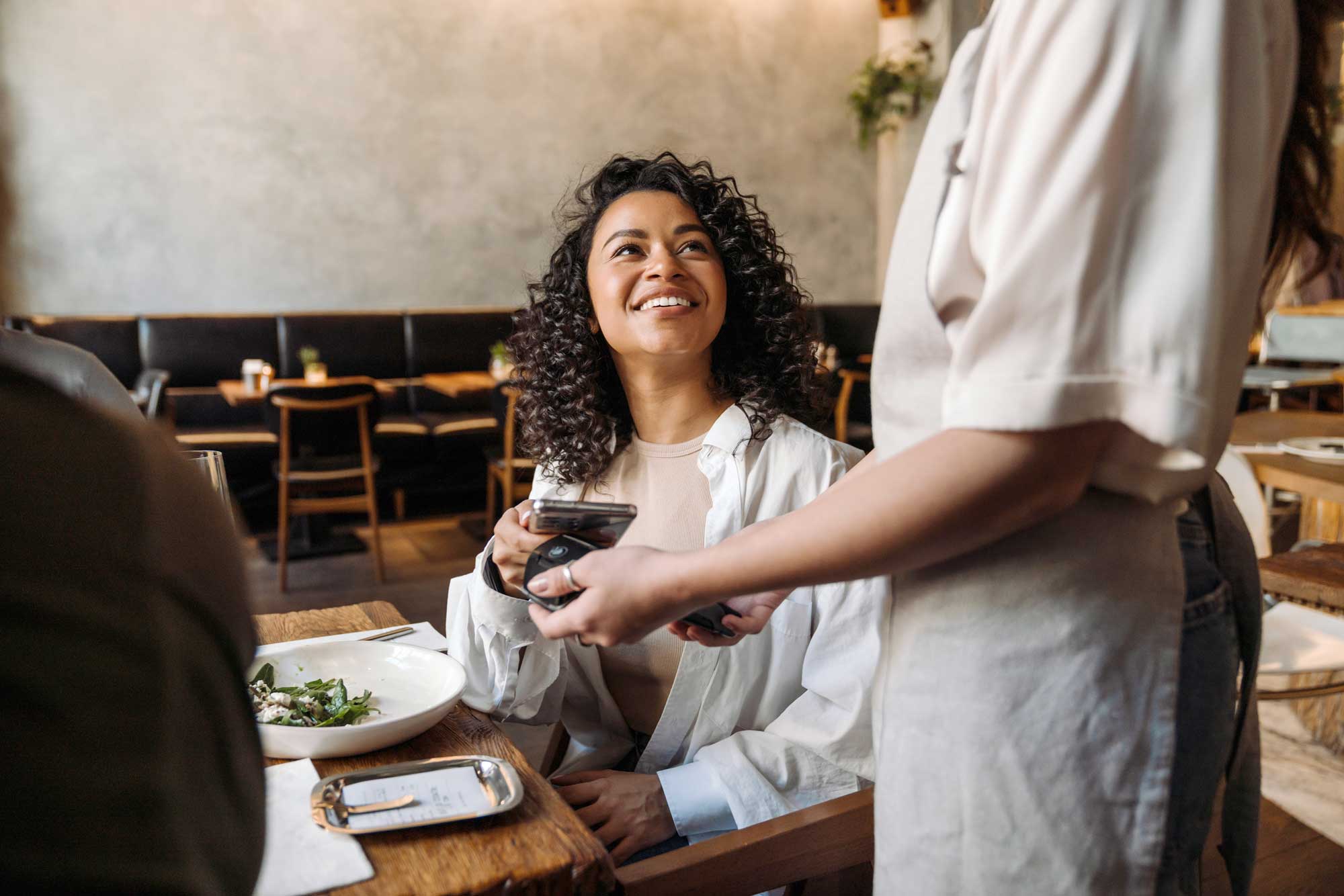
Cash, debit card, credit card, Apple Pay – all in one system, with tip splitting.
6. Delivery portal integration & webshop
Lieferando, Wolt, Uber Eats directly in the POS – no extra tablet. Optional: your own commission-free webshop.
7. Analytics & reporting
Best-seller/worst-seller analysis, peak times, average receipt value – automatic, daily, and across multiple locations.
[block-start:attention-banner]
💡 SIDES Insight
The SIDES POS system combines all 7 functions in one platform – natively, without external tools. Table plan, split bill, kitchen monitor, delivery portal integration, and your own webshop all run in one backend. Book a demo now.
[block-end:attention-banner]
Which POS system is right for my restaurant?
The answer depends on your business model:
- Small restaurant, classic table service, no delivery: An iPad system like orderbird or Lightspeed may be sufficient.
- Restaurant with delivery, webshop, or multiple ordering channels: An all-in-one system like SIDES is the better choice – all channels run in one backend, without having to maintain external interfaces.
- Multiple locations or franchise: Centralised menu management, uniform reporting, and branch administration are essential. This requires a scalable platform.
A simple POS system is cheaper to purchase – but more expensive to run if additional tools for delivery portals, webshop, or kitchen management are added. It pays to realistically compare the total costs.
[block-start:attention-banner]
💡 SIDES Insight
If you are already using another system and want to switch: the SIDES onboarding team will handle your menu, setup, and training. Most businesses are up and running within a few days. Get a no-obligation consultation now.
[block-end:attention-banner]
SIDES at a glance: POS system for restaurants
SIDES has been specifically developed for restaurants, delivery services, ghost kitchens and franchise systems, and grows with your business – from a single outlet to a chain of branches.
- Table plan & floor management
- Mobile order taking & QR code ordering
- Kitchen display system & kitchen communication
- Split bills & all payment methods with SIDES Pay
- Delivery portal integration (Lieferando, Wolt, Uber Eats)
- Own webshop & ordering app
- Self-order kiosk for fast counter service
- Branch management & central reporting
- Cloud-based TSE, compliant with GoBD and KassenSichV
2027 POS compliance
[block-start:attention-banner]
⚠️ Mandatory from 1 January 2027
All catering businesses require an electronic POS system with a certified TSE. Open cash drawers are no longer permitted. The SIDES POS system is already fully TSE-compliant. More on the 2027 POS requirements →
[block-end:attention-banner]
[block-start:faq]
Frequently asked questions about POS systems for restaurants
Which POS system is the best for restaurants in Germany?
That depends on your business model. For table service only, iPad systems like orderbird may be sufficient. For restaurants with delivery, a webshop or multiple channels, SIDES offers a complete platform. You can find a structured overview in the SIDES POS system comparison 2026.
Does my restaurant need a TSE in its POS system?
From 1 January 2027, yes – for all businesses with cash sales. The SIDES POS system is already fully compliant: certified cloud TSE, DSFinV-K export and automatic receipt issuance are included as standard.
Can I integrate Lieferando and Wolt directly into the POS system?
With SIDES, yes – natively, without third-party providers. Orders land directly in the POS system and are processed automatically. No separate tablet, no manual entry.
How much does a POS system for a restaurant cost?
Basic systems start from approx. €50/month. Complete catering platforms range from €150–€300/month, depending on the modules. One-off hardware costs also apply. Important: compare the total costs of all required tools realistically.
How does switching POS systems work while the business is running?
The SIDES onboarding team manages the entire transition: transferring your menu, setting up hardware, and training your team – most businesses are up and running within a few days.
[block-end:faq]
Created with the help of AI.
Did you enjoy this article?

30% commission per order?
Calculate in 30 seconds how much revenue you're losing to delivery platforms by not having your own webshop.